
By Melissa Alonso | November 2026 - Atlanta, Georgia
What if the highway dividing downtown Atlanta could become the foundation for a more connected city?
That possibility is driving The Stitch, an ambitious plan to transform a portion of Atlanta's Downtown Connector into 17 acres of public green space while creating new opportunities for housing, transportation, and neighborhood development.
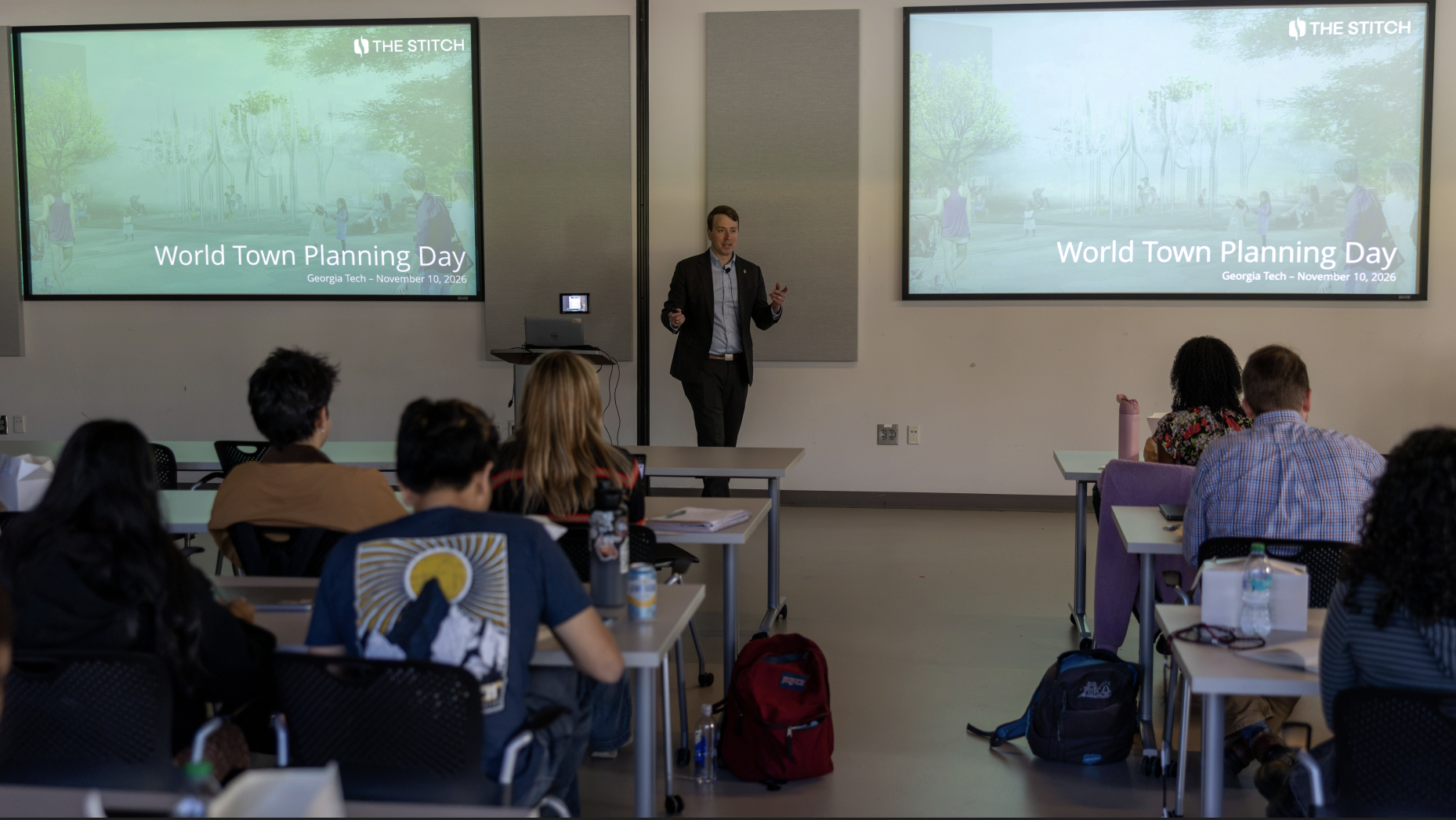
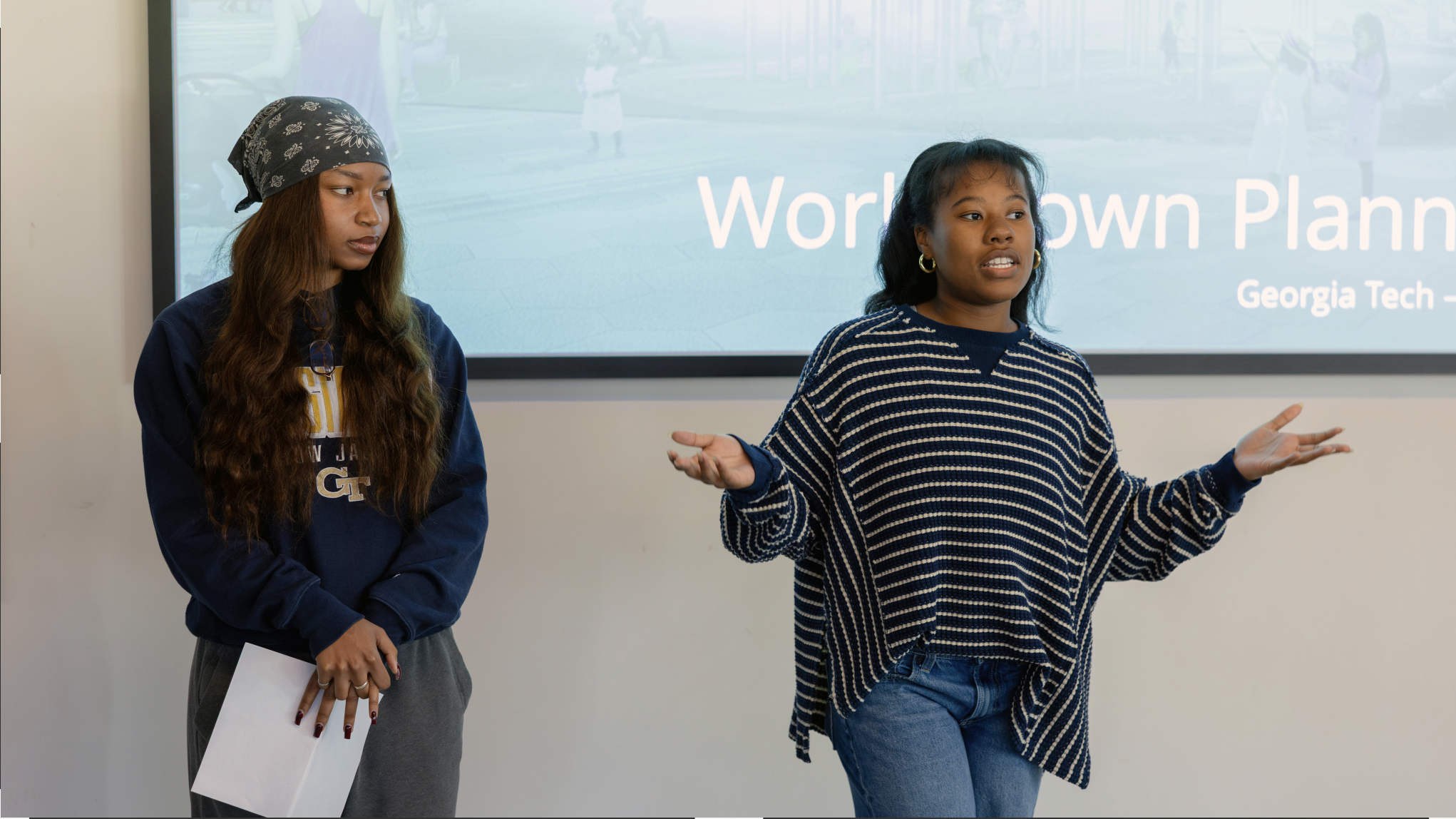
On November 10, Jack Cebe, president and CEO of Atlanta Downtown Stitch Inc., returned to Georgia Tech to share the project's vision and the planning challenges behind it during a World Town Planning Day lecture hosted by the School of City and Regional Planning (SCaRP) and organized by the Student Planning Association (SPA).
For Cebe, a Georgia Tech alumnus whose career spans landscape architecture, transportation engineering, and urban development, The Stitch demonstrates how thoughtful planning can address challenges that have shaped cities for generations.
"Talent exists everywhere in every community, but opportunity does not," Cebe told students.
Understanding Atlanta's Past to Plan Its Future
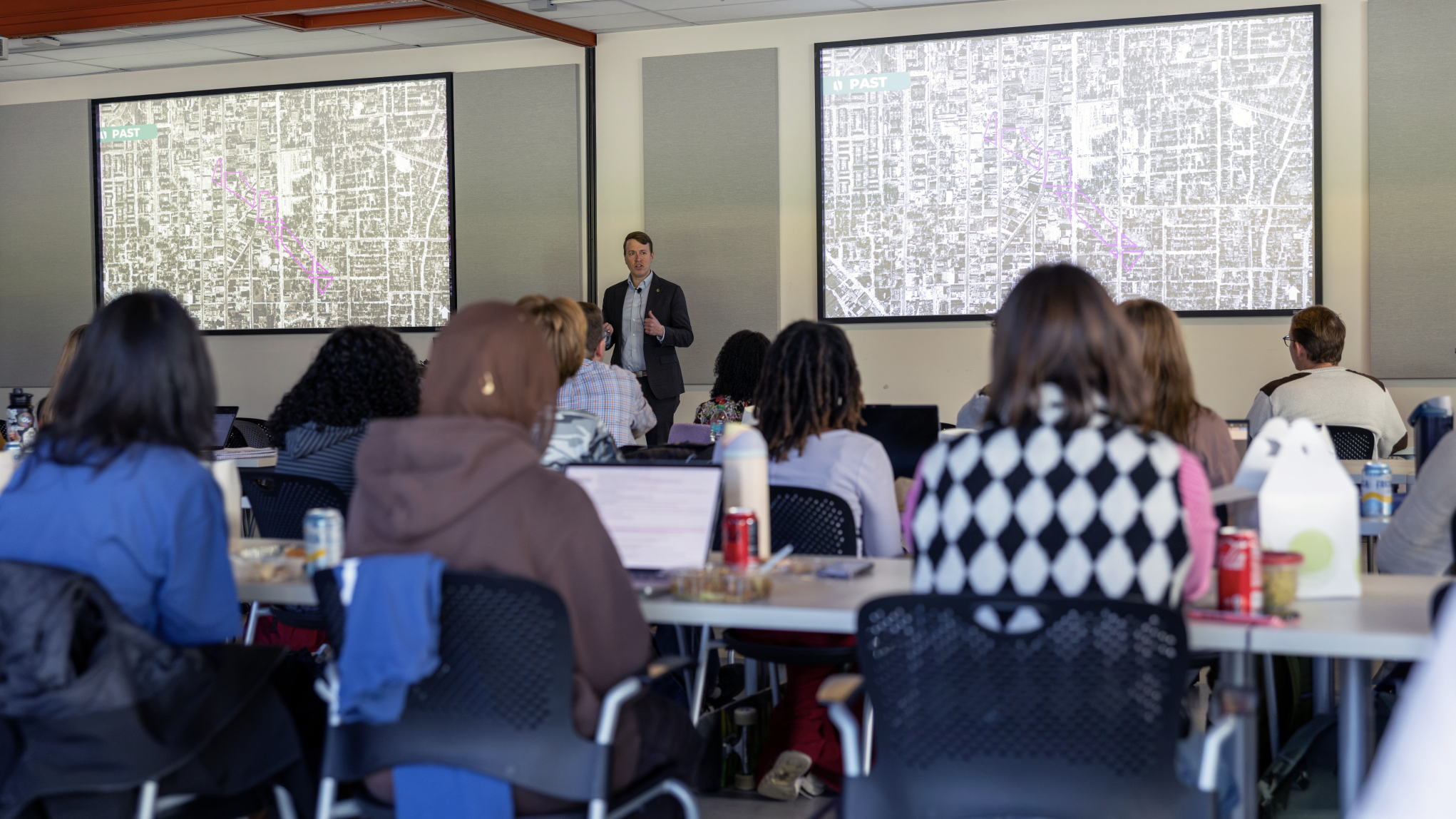
Before introducing The Stitch's proposed parks and public spaces, Cebe took students through the history of downtown Atlanta.
Using photographs that illustrated the city's transformation between 1960 and 1978, he explained how interstate construction and urban renewal fundamentally changed Atlanta's urban landscape.
Neighborhoods such as Buttermilk Bottom, once home to working-class residents near downtown, were demolished, while highways created physical barriers between established communities.
Cebe emphasized that those decisions were not simply about transportation. They also shaped patterns of residential segregation, economic opportunity, and access to jobs and services that continue to affect Atlanta today.
The Stitch seeks to address some of those divisions by reconnecting downtown with surrounding neighborhoods through new public spaces and pedestrian connections.
The proposed project would cover approximately three-quarters of a mile of Interstate 75/85, creating a network of parks above the existing highway.
But Cebe explained that the vision extends beyond building a park.
Within roughly half a mile of the project, approximately 60 acres of land could potentially be redeveloped, creating opportunities for new housing and neighborhood amenities in an area already served by MARTA and major employment centers.
For students studying city and regional planning, the project offered a real-world example of how infrastructure decisions can influence urban development for decades.
Designing a Downtown Where People Want to Live
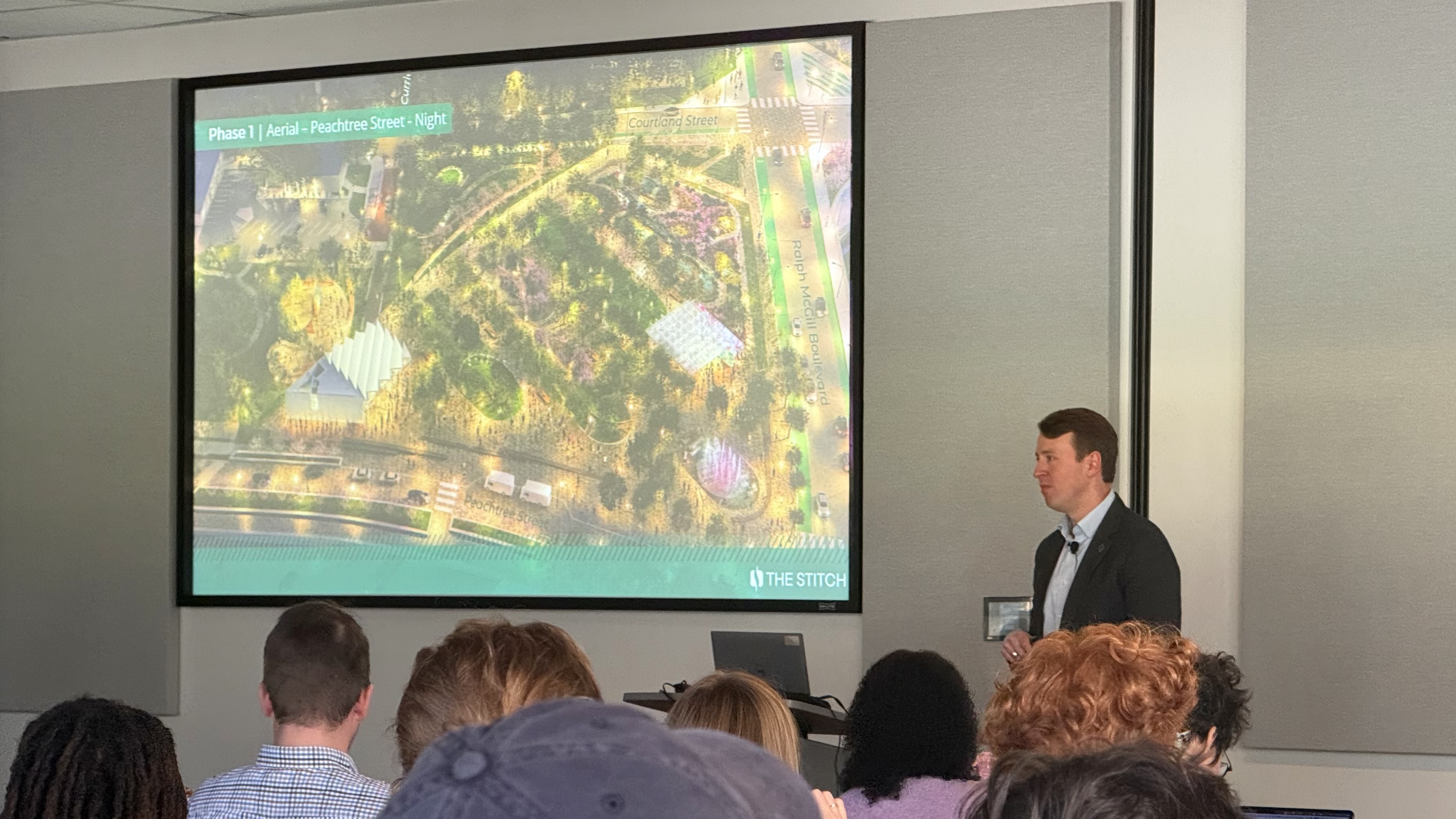
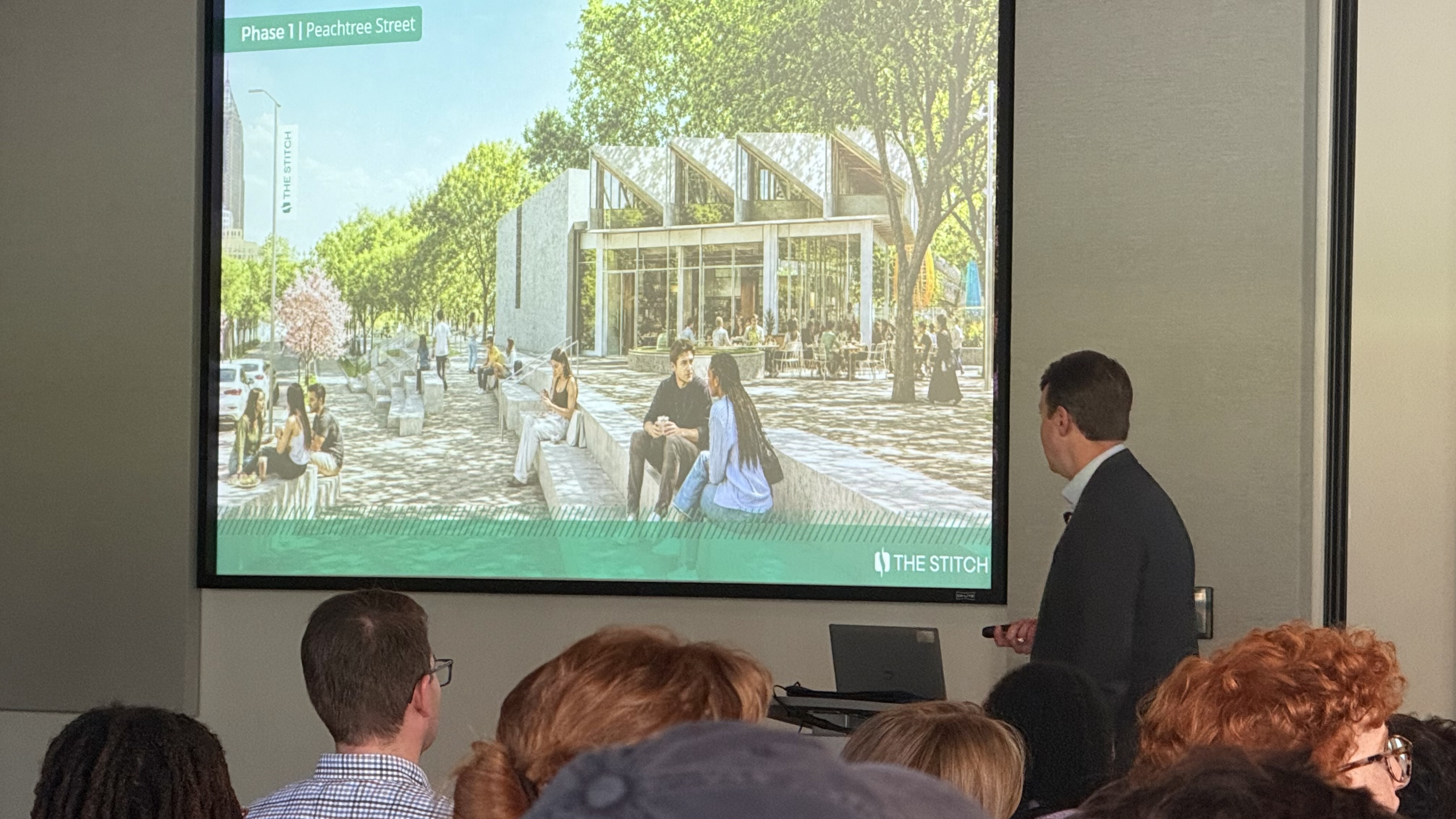
During the lecture, Cebe shared renderings of The Stitch's first phase, illustrating how an area currently dominated by highway infrastructure could become a destination for residents and visitors.
The proposed spaces include tree-lined lawns, shaded gathering areas, playgrounds, public art, and flexible spaces for community events.
A planned playground inspired by the Piedmont region's native landscape would introduce children to local plants and natural environments, while a proposed gateway pavilion along Peachtree Street would offer gathering space and food service.
Cebe explained that the designs reflect feedback gathered during an extensive community engagement process.
Residents identified shade, family-friendly recreation, community gathering areas, and quiet spaces as priorities for the future park.
Those conversations helped shape a broader vision for downtown Atlanta, one that includes more permanent residents and the amenities needed to support everyday neighborhood life.
Cebe pointed to the energy surrounding the 2026 FIFA World Cup as an example of downtown's potential when people fill its streets, restaurants, and public spaces.
The challenge, he explained, is creating that activity beyond major events by building a downtown where people can live, work, and spend time throughout the year.
Planning for Growth Without Leaving Communities Behind
The lecture also prompted discussion about one of Atlanta's most pressing planning challenges: balancing redevelopment with housing affordability.
The Stitch's broader redevelopment plan establishes a goal for 30% of housing in the surrounding district to be affordable.
During the question-and-answer session, students asked how the project could avoid challenges experienced along the Atlanta BeltLine, where redevelopment and rising property values have complicated efforts to preserve affordable housing.
Cebe discussed the importance of establishing affordability strategies early, including identifying opportunities for publicly owned land, partnerships with local churches, and development near the former Atlanta Civic Center.
He also described the project's work with a legacy resident advisory group involving descendants of people displaced from neighborhoods affected by historic urban renewal.
Their participation is helping inform the project's planning and approach to long-term community involvement.
The discussion highlighted a central challenge facing today's planners: how to encourage investment and growth while ensuring existing communities have opportunities to benefit.
Turning a Vision Into Reality
Cebe also offered students insight into the practical challenges of implementing a major urban development project.
The Stitch requires coordination among engineers, planners, public agencies, property owners, community organizations, and private partners.
Its first phase is estimated to cost approximately $250 million, including construction of the highway cap and the park above it.
Cebe shared that the project had previously been positioned to begin construction in fall 2026 before losing approximately $160 million in anticipated federal funding.
Project leaders are now working with local and regional partners to assemble alternative financing. Cebe expressed optimism that a construction start date could be announced once the necessary funding is secured.
He also explained how the project's design takes advantage of the interstate's existing position below surrounding streets.
Rather than closing or rebuilding the highway, construction would involve adding bridge structures between existing crossings, allowing traffic to continue moving during construction.
The project also includes plans to improve pedestrian connections and support development around MARTA's Civic Center Station.
Together, these efforts illustrate how transportation planning, land use, landscape architecture, and economic development intersect in projects of this scale.